
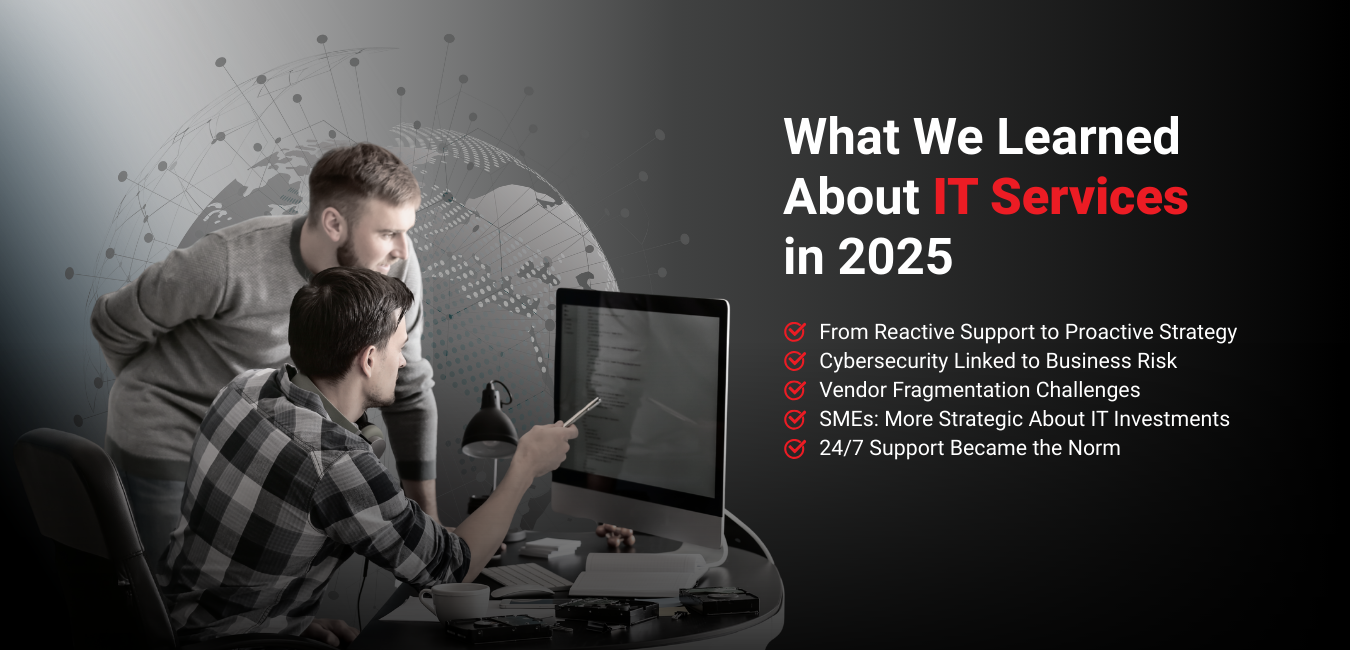
Remember the way we used to talk about IT not so long ago. The invisible cables under the floorboards. The unnamed people we called when the lights on the router started blinking the wrong way. And the others who arrived on-site when a signal was raised, with a cable in one hand, a cup of coffee in the other, and the stoic readiness to solve the problem and save the day.
But in 2025 this story began to sound a little different. IT stopped living in the shadows and stepped into the spotlight more than ever before. It pulled up a chair and finally took a seat at the big table. The one where strategies are discussed, where risks are taken, where the big ideas about the future of the world and innovation are often written down on a paper napkin. Technology stepped out of its supporting role as a mere assistant to the business. Technology became the business itself. Technology became the leading conductor of how a business grows, at what pace it can develop, and how secure the ground beneath its feet really is.
And suddenly the idea of “after-hours” faded away. The machines don’t sleep, the threats don’t sleep. Customers don’t sleep, so IT and its support also crossed into the sleepless zone. More and more companies began to reach an important conclusion. Hiring one service provider for this, another provider for that, and a third for the problem no one can seem to handle is not the same as building a reliable and experienced team. It is much more like juggling knives. Small businesses, the ones that used to buy technology the way they buy office furniture — investing in something useful, durable, and replaceable — finally began to realize that every IT decision is actually a bet on their future.
And so 2025 turned into a kind of classroom for all of us. Sometimes the lessons were expensive. Sometimes the lessons were easy to learn. Other times the lessons arrived at 3:12 in the early morning with flashing alerts and a worrying feeling in the stomach.
But all the lessons were learned. And it is precisely these lessons that are shaping the way businesses around the world will operate in 2026. The ways in which businesses are protected, planned, and built. Let us dive together into a brief retrospective and recall some of the most important IT lessons of 2025.
Lesson #1 – IT Moved from Reactive Support to Proactive Strategy
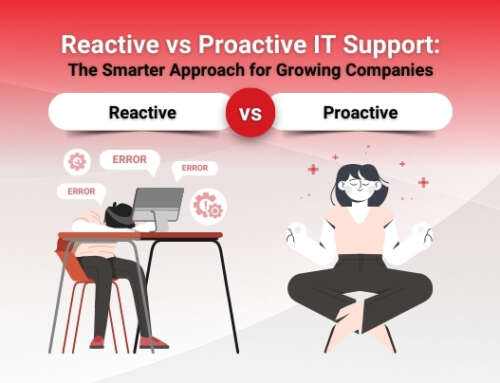
In the past year, IT finally began to free itself from the dominance of the status-quo “problem–fix” approach. For more than a decade, IT support teams mostly took on the role of digital firefighters, rushing from one urgent issue to the next. It was considered normal to reset passwords, repair servers, and solve problems only when these things had already become absolutely necessary. But the last year marked a lasting change in this reactive approach. Businesses began to realize that constantly responding to problems only after they have already occurred and escalated is not only expensive and stressful, but also a pebble in the wheel of business growth. Thanks to a more reliable set of monitoring, automation, and analytics tools, IT teams began to detect weaknesses, anticipate risks, and identify cyber threats long before they turned into serious issues. And so IT became a leading part of every business strategy. IT is no longer just the department that fixes things in times of crisis, it is a strategic partner that supports the business in its faster, smarter, and more secure growth and development.
Lesson #2 – Cybersecurity Became Directly Linked to Business Risk
In 2025, we stopped looking at cybersecurity simply as a technical problem and finally recognized its potential to become a serious business risk. In fact, a risk just as real as cash flow issues, supply chain disruptions, or any legal exposure. A single breach in the system is no longer seen merely as downtime and data leakage. It now has the power to cause serious reputational damage, lead to regulatory penalties, trigger customer distrust and withdrawal, and in some cases even bring about a complete operational shutdown. As cyber threats, ransomware, and social engineering attacks began to grow more confident, aggressive, and large-scale, businesses seemed to realize that security is not just a bonus or an upgrade, it is a key pillar of business safety and resilience.
Lesson #3 – Vendor Fragmentation Is Too Expensive and Too Slow
By 2025, many businesses had learned the hard way that dividing IT tasks and responsibilities among several IT teams and service providers not only fails to create efficiency, but actually leads to complete chaos. So something had to change and positive change really did begin to happen. More and more organizations started putting an end to situations where one specialist or team was responsible for network support, another for cloud services, and a third for cybersecurity. As we can imagine, this entire complicated setup was held together by hundreds of unsent emails, poorly organized meetings, and deteriorating communication. As a true rescue alternative, managed IT services began to stand out. They represent a single integrated model in which one strategic partner is enough to take responsibility for, monitor, and manage all IT elements of the business. This approach is not only less expensive for the business, but also far more reliable, ensuring better communication, fewer mistakes, greater efficiency, and stronger security.
Lesson #4 – 24/7 Support Became the Norm, Not the Exception
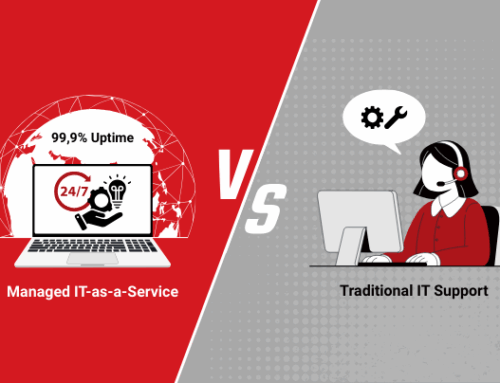
Over the past year, businesses increasingly began to understand that system outages and problems definitely do not wait for a company’s working hours to happen. That is why IT support cannot happen only during business hours, instead it requires continuous coverage. Customers from around the world, systems, and cyber threats never stop interacting with a business’s IT infrastructure, and any delayed response or action from the business can mean missed opportunities and revenue, lost clients, and even escalating IT issues. This is why managed IT-as-a-Service (MITaaS) very quickly emerged as the most adequate and effective solution, offering continuous monitoring, instant incident response, and proactive system maintenance. A perfect solution that ensures companies no longer have to panic and search for available IT specialists after hours or rely on fragmented teams that do not communicate effectively. A single trusted IT partner is fully sufficient to ensure smooth operations 24/7.
Lesson #5 – SMEs Became More Strategic About IT Investments
Over the past year, small and mid-sized businesses began to view IT not simply as another expense, but through the lens of strategic planning for growth and resilience. As a result, every hardware purchase, every software license, and every signed IT service agreement began to be carefully considered and evaluated based on its long-term impact. In other words – what role will this investment play in improving business efficiency and productivity, enabling scalability, and ensuring protection? Once again, MITaaS played a key role in this context, allowing small and mid-sized businesses to access a level of service quality that, until recently, was only available to large companies, benefiting from proactive support and the convenience of predictable, plannable costs. And all of this without the need to build in-house IT teams composed of diverse specialists. For many small and mid-sized businesses, this smarter, more strategic IT investment became the tool that allowed them to step onto the stage with the big players and remain competitive.
What These Lessons Mean for 2026
With the arrival of the new year, the lessons of 2025 have already been applied by enough companies to significantly reshape the IT landscape. What is emerging as the philosophy for the year ahead is that businesses can no longer, and no longer want to, rely on outdated approaches such as reactive strategies, fragmented service providers, or sporadic support. As a result, IT now stands out for its strategy, integration, and proactivity. Cybersecurity and business risk now go hand in hand, every investment is made with its long-term impact in mind, and resilience and efficiency are prioritized. Managed IT-as-a-Service is a key player in this landscape, increasingly asserting itself as an effective alternative and a unified solution for companies of all sizes. MITaaS offers continuous infrastructure monitoring, a proactive approach, constant support, and optimized operations. Thanks to this type of service, in 2026 IT will not just support the business, it will become a primary driver of its growth.
As we have seen over the past year, IT has stepped out of its passive role and confidently taken a position as a core engine of business growth, resilience, and security. If you and your business are ready to leave reactive status quo behind and move forward, now is the perfect time to harness the potential of Managed IT-as-a-Service.

Leave A Comment