
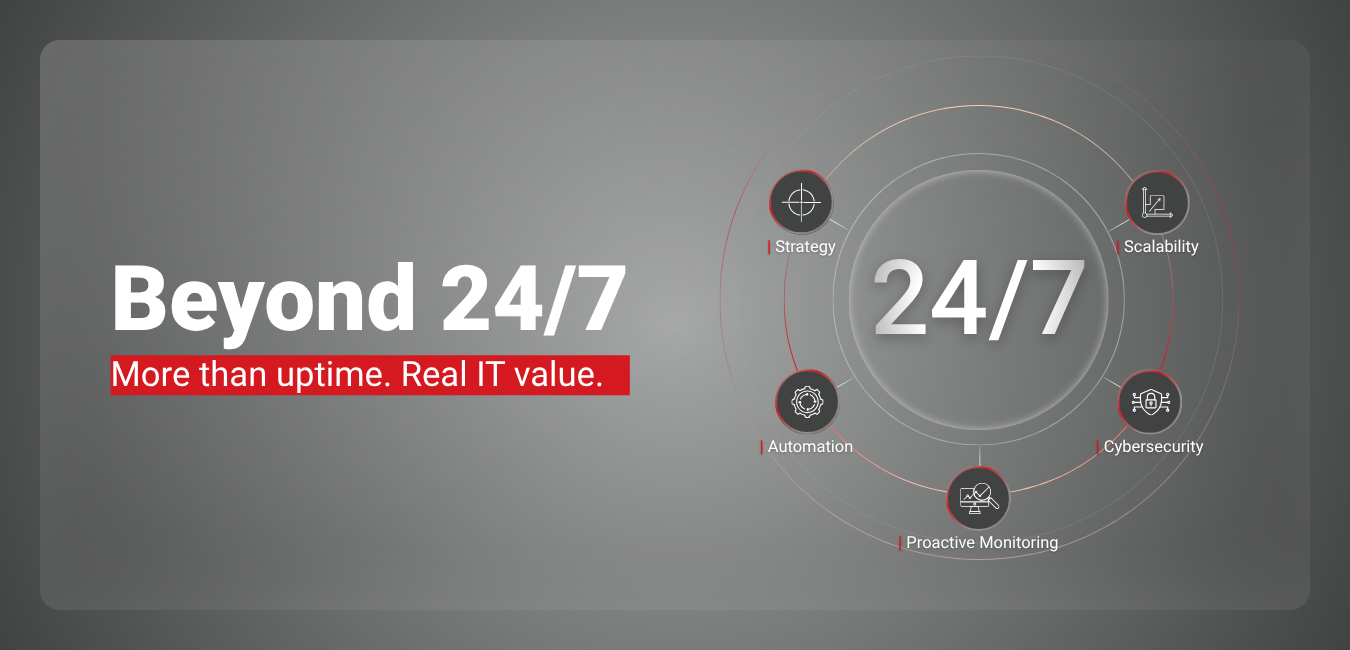
Not so long ago, 24/7 IT support was regarded as a true luxury or an expensive service offered by only a small number of providers on the market. Today, the situation is quite different, as round-the-clock IT support has become an integral part of the entire service package that a business expects to receive. In a world of constant connectivity and availability, the uninterrupted and seamless operation of systems is no longer a competitive advantage, but rather the minimum requirement for any business that aims to grow successfully.
The modern business environment is transforming continuously and dynamically. Cloud-first infrastructures, professionals and teams working remotely, customer experiences delivered primarily or entirely in the digital space – all of this is pushing businesses toward a new operating model in which operations run continuously, regardless of physical location or time zones. Downtime is no longer something as simple as a minor inconvenience, it has become a legitimate threat to profits, reputation, and even the future of a business.
At the dawn of 2026, a critical question is taking shape – if 24/7 IT support is the expected standard, what more should businesses demand from managed services in the coming months? The answer likely lies in building smarter, more proactive, and more strategically oriented partnerships, but stay with the article below as we attempt to outline the portfolio of a trusted managed services provider.
Expectation #1 Proactive Monitoring, Not Just Fast Reactions
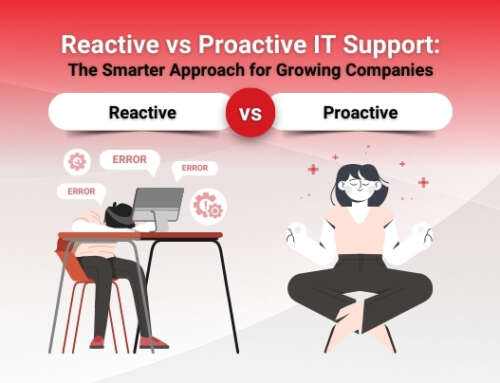
Being available 24/7 is no longer enough. In today’s world, there is a fundamental difference between an IT team that reacts when a need arises and a managed services provider that proactively works to prevent issues before they occur and negatively impact the business. Proactive monitoring shifts the focus from reactivity to foresight and anticipation. Potential risks and problems are identified at a very early stage thanks to continuous monitoring, intelligent alerting systems, and early anomaly detection. In this way, issues are resolved long before they reach the end user and are far easier to control. This strategy enables timely intervention by IT teams before performance is affected and systems go offline. As one might expect, all of this has a significant positive impact on the business, including minimized risk of unplanned operational stoppages, reduced downtime, and much lower operational risk. Instead of investing valuable time and resources in resolving major crises, businesses can focus on building greater stability and security, confidently relying on the fact that their IT environments are constantly monitored, analyzed, and optimized by professional teams.
Expectation #2 Security Built Into Everyday Operations
Cybersecurity can no longer exist as a standalone service that we turn to only when something serious goes wrong. In modern IT infrastructures, cybersecurity must be part of all everyday tasks and operations, not a compliment or an add-on. It is therefore logical that today’s businesses expect modern managed services providers to deliver continuous security monitoring, real-time threat detection and immediate response, while at the same time implementing preventive measures that reduce human risk. Cybersecurity has become an active process through the identification of suspicious behavior and the prevention of incidents, which is a major shift from the previously accepted understanding of security as a set of tools used only when needed. The role of managed services in this context is to unify security and daily operational processes into a single strategic advantage for the business. When this is achieved, the business benefits from better visibility, faster response, and stronger protection.
Expectation #3 One Partner, One Accountability Model
The most well-known problem with fragmented IT services is as it follows – when something stops working, everyone starts avoiding responsibility and passing the issue on to others. Multiple service providers, overlapping tools and services, and a lack of effective communication between different teams and specialists often lead to delays, confusion, and unnecessary complexity. And since bitter experience is a good teacher, more and more businesses are turning toward consolidating the IT services they receive, with a managed services provider emerging as the most suitable alternative to assume full responsibility for the end-to-end support of the business’s IT infrastructure. In this scenario, confusion is eliminated and replaced by clarity and transparency. Working with one trusted partner ensures that accountability is clearly defined, problems are resolved faster and more efficiently, and decision-making becomes more effective. For businesses, this also means less time and effort spent coordinating the work of multiple teams or specialists.
Expectation #4 Strategic IT Guidance, Not Just Technical Support
Over time, and with the transformation of the business environment, the role of managed services providers has evolved from simple technical support into a strategic partnership. Businesses no longer simply expect providers to help maintain running systems. The expectation is for providers to offer guidance for growth, better adaptation to the environment, and enhanced business competitiveness. This, in turn, entails active involvement of providers in IT planning, regular technology assessments and analyses, and continuous alignment between IT strategies and broader business goals. Providers are no longer just helping businesses respond quickly and appropriately when problems arise; they are expected to identify needs, plan investments, and build scalability and adaptability for future market changes. Today, technology is increasingly viewed as a generator of efficiency, innovation, and long-term success.
Expectation #5 Scalability Without Added Complexity
Business is constantly growing, and IT must keep pace with this development. Managed services providers are expected to grow proportionally with organizations, smoothly supporting new employees, expanding the coverage of offered services across more locations, and integrating new systems and applications. In this context, the primary task of providers is to keep up with the scalability of the business without causing chaos or complicating processes, and without disrupting or affecting the daily workflow. Providers can ensure seamless, smooth, predictable, and fully supported business growth by anticipating emerging needs and proactively adapting infrastructures. Businesses should have the confidence and peace of mind that providers offer a unified framework and approach that adapts effortlessly to new requirements and demands, whether it involves onboarding new employees, opening new offices, or integrating new applications. When this symbiosis exists, technology becomes a true enabler of business growth.
What This Means for Businesses in 2026
When choosing a managed services provider, companies should focus not just on basic standards for operational continuity, but also ask key questions that highlight the advantages of these providers over other market alternatives. Does the provider offer a reactive approach, or can it anticipate emerging issues long before they escalate? Is cybersecurity an integral part of every process, ensuring continuous protection of user data? Are roles and responsibilities handled with clarity and transparency, or does everything blur across separate teams and specialists? This mindset transforms the selection of a provider into strategic planning, allowing the business to partner not merely with an IT service executor, but with a proactive, security-focused, trusted ally with clearly assumed responsibilities. Only such a reliable ally can support business growth, minimize potential risks, and ensure the optimal flow of operations.
Closing Thoughts: Raising the Bar for Managed Services
24/7 IT support is not the finish line; it is merely the starting point. Modern businesses exist and operate in a constantly connected, cloud-first world. In such a world, the natural evolutionary model for IT support is Managed IT-as-a-Service. Managed ITaaS represents a unified approach to proactive monitoring, comprehensive security, strategic planning and growth, and scalable, optimized operations. The true value of this most advanced type of service lies not in reactivity, but in anticipating risks and issues, creating an unshakable synergy between IT and broader business goals, and enabling growth and innovation without chaos or complexity. This year, any company that embraces its IT provider as a trusted, strategic partner, rather than merely a fire-fighter, will evolve into a business that shapes the future, transforming technology from a necessity into a competitive advantage.

Leave A Comment